
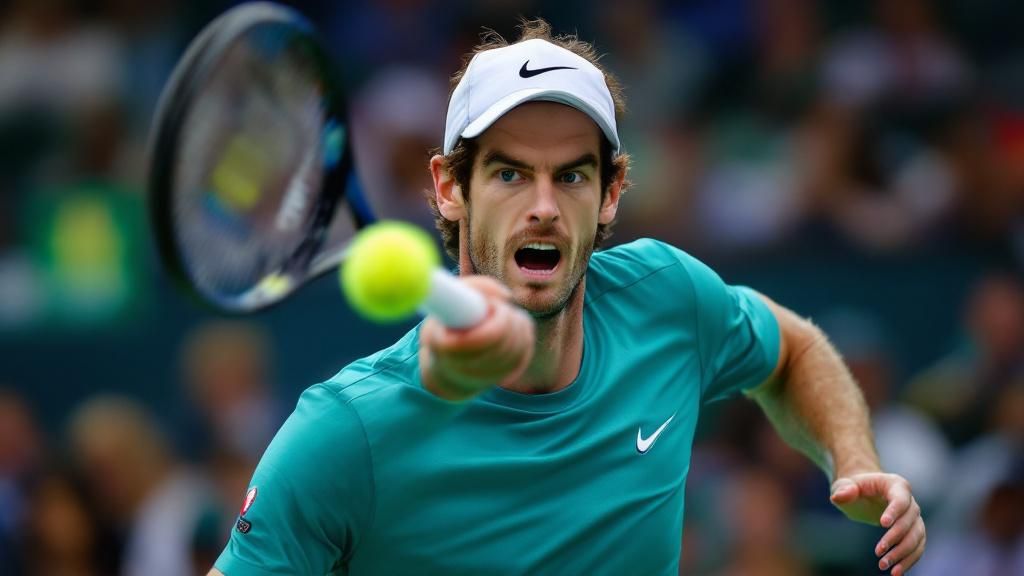
Andy Murray’s meticulously planned comeback to competitive tennis has sent shockwaves through the British sporting establishment, indicating a likely revival for the nation’s most successful player. Following his major surgical procedure, Murray’s strategic return to competitive play promises to reconfigure the British tennis landscape, inspiring a emerging generation whilst reviving hopes of further Grand Slam glory. This article explores how his careful strategy to competitive play is affecting grassroots growth, supporting rising prospects, and repositioning Britain as a competitive powerhouse in international tennis.
The Champion’s Return
Andy Murray’s comeback to competitive tennis signifies considerably more than a singular success; it demonstrates perseverance and fortitude that echoes across British sport. After enduring a career-threatening hip operation, many doubted if the three-time major winner would ever compete at the highest level again. His determination to make a comeback, however, demonstrates an unwavering commitment to his game and an unconquerable determination that has shaped his competitive life. The global sports community observes with keen interest as Murray confronts this critical juncture, showing that age and injury need not dictate an athlete’s path or sporting aspirations.
The significance of Murray’s comeback plan extend well beyond his individual performance on court. His involvement with professional tournaments reinvigorates British tennis, offering a tangible example of resilience to emerging athletes navigating their own challenges. Moreover, his resurgence tale offers invaluable lessons in mental fortitude and athletic recuperation, establishing new benchmarks for sporting endurance. As Murray plays again, he at the same time coaches the younger cohort, forging a link connecting proven success and emerging talent that strengthens the complete British tennis community.
Impact on British Tennis Development
Murray’s return to competitive play has generated considerable impetus within the British tennis system. His participation in top-tier events elevates the game’s standing domestically, generating increased investment in young player training schemes and practice venues. The ripple effects extend beyond professional ranks, motivating community involvement and encouraging sports authorities to focus on player discovery and support structures for up-and-coming British talent.
Mentorship and Guidance
Beyond his courtside performances, Murray has assumed an growing significant coaching position within the British tennis community. His readiness to impart expertise acquired through competing at the highest level provides essential support to younger players navigating their own career trajectories. This informal coaching impact enhances formal structures, delivering practical insights into tournament preparation, mental resilience, and handling professional expectations.
Murray’s accessibility to rising players represents a departure from established pecking orders across professional competition. By working closely with talented emerging athletes, he exhibits a commitment towards the advancement of British tennis. His guidance stretches past purely technical training, encompassing strategic career guidance, commercial arrangements, and psychological techniques crucial for sustaining long-term competitive success in international competition.
- Provides expert advice on tournament selection and planning
- Shares psychological strength methods built over career
- Facilitates connections to training and advisory networks
- Demonstrates professional standards through consistent work ethic
- Encourages balanced approach between drive and personal wellbeing
Competitive Performance and Rankings
Murray’s re-entry into competitive tennis has shown impressive durability, with his performance metrics revealing a competitor intent on regaining his place within professional tennis’s upper echelon. Despite the inherent physical rigours of top-tier competition, his ranking trajectory has progressively advanced, demonstrating his technical proficiency and mental fortitude. His wins over proven rivals have prompted fresh conversation about his capacity to challenge for Grand Slam honours, whilst also delivering valuable data on his rehabilitation status and playing condition.
The deliberate strategy of Murray’s event choices has proven instrumental in overseeing his recuperation whilst preserving competitive edge. By thoughtfully juggling elite-level events with adequate recovery periods, he has enhanced his competitive progression without compromising lasting viability. His achievements have energised British tennis enthusiasts and commentators alike, proving that prior injuries and advancing years need not diminish a player’s competitive ambitions or accomplishments at the highest echelons of elite competition.
Future Prospects and Legacy
Andy Murray’s strategic return to the professional circuit has fundamentally altered views on what defines a accomplished tennis trajectory. His measured approach shows that longevity and purposeful competition can function alongside physical challenges, providing valuable lessons to aspiring athletes globally. The broader impact of his comeback extend beyond personal achievement; Murray’s involvement in professional tennis reinvigorates British tennis infrastructure, generating financial support and public interest previously directed elsewhere. His influence on younger players illustrates how seasoned expertise and determination transcend standard career patterns, establishing updated measures for athletic perseverance.
Looking forward, Murray’s legacy will undoubtedly include more than tournament victories and ranking positions. His dedication to developing rising British players has built a lasting foundation for the future generation of competitors aiming for international success. By balancing competitive ambitions with developmental responsibilities, Murray has positioned himself as both playing member and custodian of British tennis’s future. This combined position bolsters the nation’s competitive foundation whilst ensuring his deep experience benefits the sport long after his final competitive appearance, cementing his status as influential presence within British sporting history.
